Questions about chord changes
How many chord changes a minute is good?
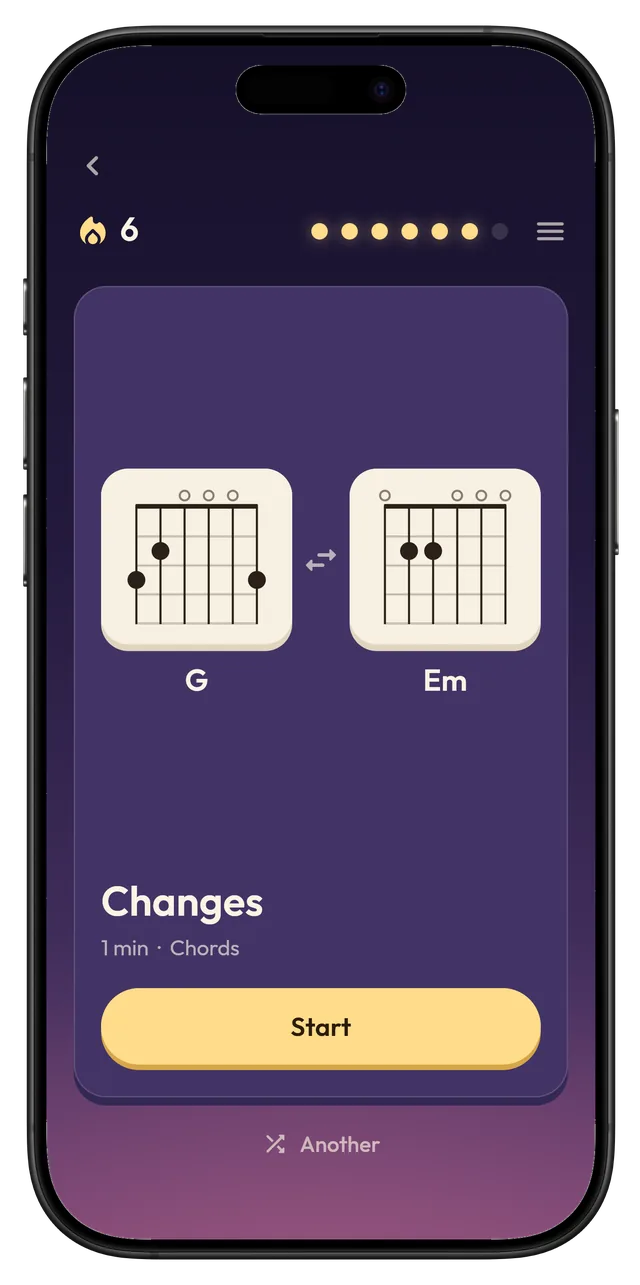
Compare against yourself. Count only the changes where the new chord rings clean, write the number down, and try to beat it tomorrow. The one-minute changes exercise is built for exactly that.
How do I change from G to C?
G and C share no fretted note, so nothing can stay down. Move all three fingers at once, as one shape, and practice the move in slow motion before you play it in time. The same goes for C to D and G to D.
Why do I stop strumming when I change?
Your strumming hand waits for the fretting hand. Keep the strum going no matter what. If the new chord is late, strum the open strings on the last beat while your fingers move. In a song it sounds fine.
Should I look at my fretting hand?
At first, yes. Then look at where your fingers are going, not where they are, so each finger heads for its next spot before it lifts.
How long until changes feel fast?
It depends on the pair and how often you play it. A counted minute a day shows the number climbing, which is easier to trust than a feeling.
Count your changes in FretBug. Open Practice and pick Changes, a minute on the clock.
Try it free